

Location: France
Partners: TotalEnergies
Main activities: Biofuel production, plastic recycling
Other activities: Renewable hydrogen, biomethane, solar energy, electricity storage
Commissioning: 2025
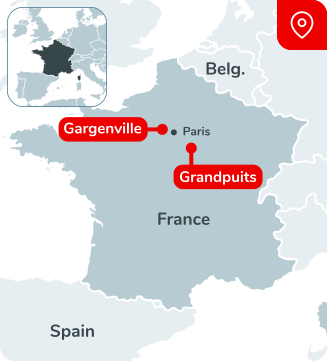
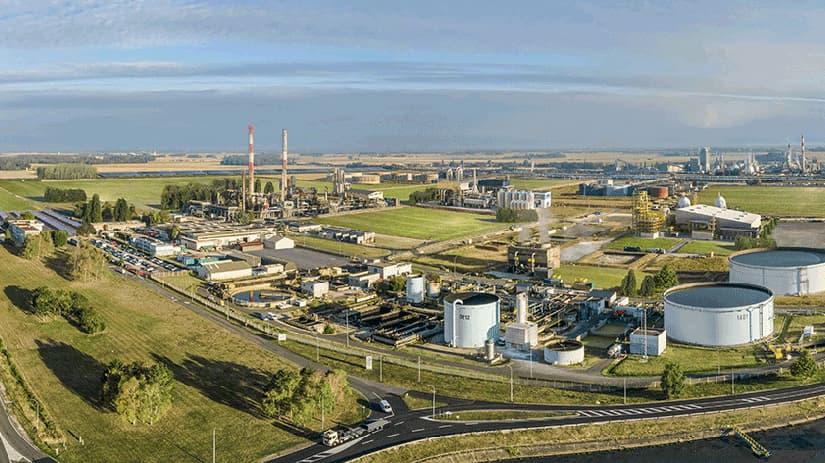
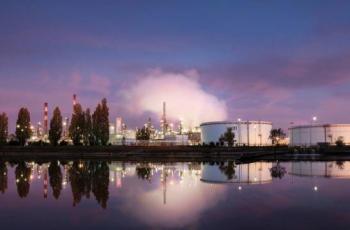
As part of the Company’s strategy, the Grandpuits refinery (Seine-et-Marne) is currently being converted into a zero-crude platform focused on new energy sources and low-carbon activities. With an investment of over 500 million euros, the project centers on four new industrial activities: the production of biofuels primarily for the aviation sector, plastic recycling, and the operation of two solar photovoltaic power plants.
A new biofuel plant
A biorefinery for producing SAF
TotalEnergies is committed to decarbonizing air travel by producing and supplying sustainable aviation fuels (SAF). By 2028, the Company plans to have a production capacity of more than half a million tons of SAF per year to meet rising European blending mandates, set at 6% in 2030, up from 2% in 2025.
To achieve this goal, TotalEnergies will commission its second French biorefinery at the Grandpuits platform in 2026. With a processing capacity of 420,000 metric tons per year of waste and residue feedstocks, the biorefinery will be able to produce up to 230,000 metric tons of Diesel Fuel (SAF) annually starting in 2026, as well as road biofuels and bio-naphtha. A partnership with SARIA ensures the site’s supply of used cooking oil and animal fats.
A renewable hydrogen production facility
TotalEnergies is committed to reducing its carbon footprint associated with the production, processing, and supply of energy to its customers. One of the strategies identified by the company is the use of low-carbon hydrogen1 to decarbonize its European refineries, which is expected to reduce its CO2 emissions by approximately three million tons per year by 2030.
At the Grandpuits platform, Air Liquide is building a production unit capable of producing approximately 20,000 metric tons of renewable hydrogen per year by recycling residual biogas from the biorefinery. In addition, this unit will be equipped from the outset with Air Liquide’s CryocapTM CO2 capture technology, which will help reduce the platform’s carbon footprint by capturing more than 110,000 tons of CO2 per year and reusing it in food and industrial applications.
An advanced plastics recycling plant
In march 2026, TotalEnergies started France's first chemical recycling plant for plastic waste using pyrolysis at the Grandpuits platform.
This facility, which is also the first of its kind for TotalEnergies, will convert 15,000 tons/year of plastic waste by pyrolysis (which involves heating the waste to high temperatures in the absence of oxygen) to obtain a pyrolysis oil called TACOil (Thermal Anaerobic Conversion Oil).
TACOil is used in TotalEnergies' units to manufacture polymers of the same quality as virgin polymers, compatible with food use, as a substitute for fossil-based feedstock. It benefits from a longterm commercial agreement between TotalEnergies, Citeo, and Paprec to secure the plant's supply of plastic waste from yellow bins (household packaging in France) and develop France's first chemical recycling sector for plastic film waste
A system for generating and storing electricity
TotalEnergies has commissioned a solar power plant expected to generate 31 GWh of renewable electricity per year—enough to power 19,000 households—as well as a battery storage facility with a capacity of 43 MWh, helping to ensure energy security and balance electricity production and consumption in France.
(1) Hydrogen produced from non-renewable resources but with greenhouse gas emissions below a maximum threshold. For example, hydrogen produced from natural gas by the steam reforming process combined with a CO~2~ capture and storage (CCS) process. In Europe, the maximum greenhouse gas emission threshold for low-carbon hydrogen is the same as for renewable hydrogen, i.e. 3.38 kg CO~2~e/kg H~2~, according to European Directive 2018/2001, known as RED II. In common parlance, low-carbon hydrogen is often considered to include renewable hydrogen