


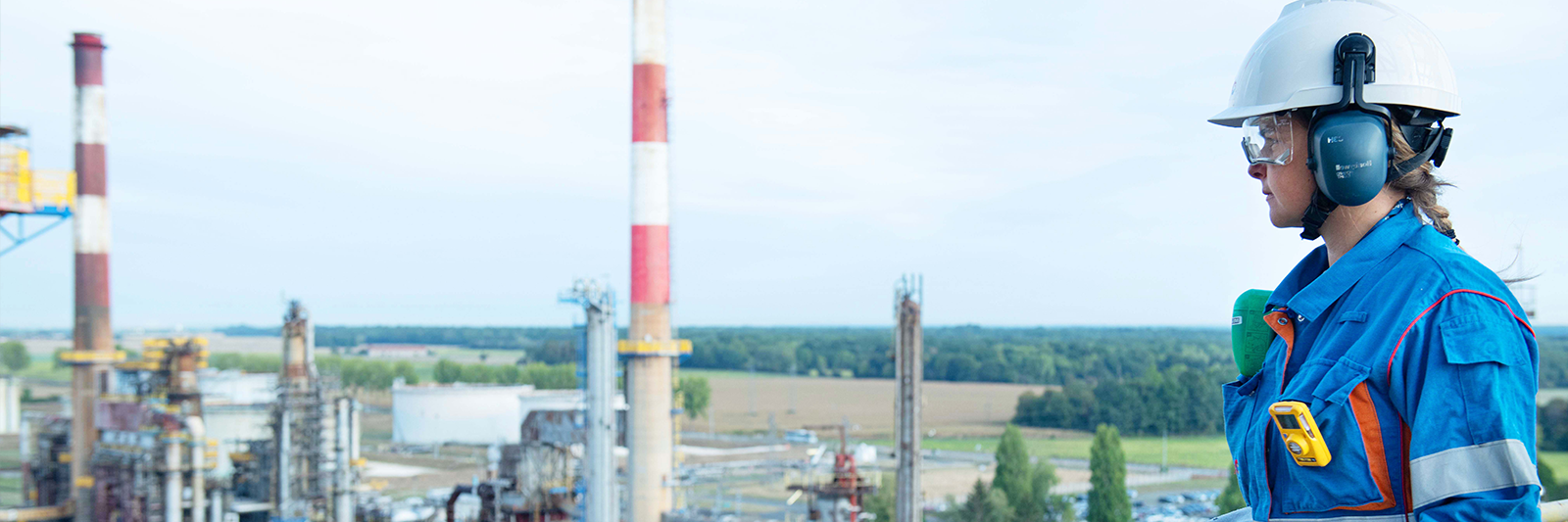
The energy transition also requires the development of low-carbon energy based on the conversion of biomass and waste, the use of renewable hydrogen, notably for refining or in the longer term the production of synthetic molecules (e-fuels) combining hydrogen with CO2 as a raw material. We are thus developing these new energies: biofuels, biogas, renewable hydrogen and synthetic fuels.
New Low-Carbon Energies
New Low-Carbon Energies
New Low-Carbon Energies

Biofuels
Today, biofuels emit more than 50% less CO2 over their life cycle than their fossil fuel equivalents, making them a partial decarbonization pathway for liquid fuels(1). While demand is emerging quickly, access to feedstocks (plants, residues, sugar, etc…) remains a barrier to growth.
Among these biofuels, TotalEnergies favors the production of sustainable aviation fuels (SAF) to decarbonize the aviation industry.
To avoid conflicts of land usage, TotalEnergies is developing solutions based on primarily food industry waste and residues (used oils, animal fats).
As of 2024, the Company increases the share of circular feedstocks to more than 75% to produce biofuels.
(1) According to the European Directive 2018/2001 named RED II. ↑

Biogas
Biogas, produced from the decomposition of organic waste, is a renewable gas. Injected into gas networks in the form of biomethane, it contributes to the partial decarbonization of natural gas uses. TotalEnergies’ gross production capacity continued to increase in 2025, reaching 1.4 TWh/year eq. of biomethane. The Company now intends to pursue its development through growth, mainly in Europe and the United States.

Hydrogen
To reduce the carbon footprint associated with the production, transformation and supply of energy to its customers, one of the levers identified by the Company is the use of low-carbon hydrogen to decarbonize its European refineries, which would reduce their direct CO2 emissions by up to three million tons a year by 2030.

Synthetic fuels
In the future, using CO2 as a raw material will help to decarbonize certain transport sub-sectors to an even greater extent. The captured CO2 can be used, in reaction with green hydrogen, to produce fuels or synthesis gas. TotalEnergies is positioning itself in this market by developing pilot units.
Our latest news on biomass and biogas


06/17
2025

Paris Air Show: TotalEnergies Signs a Deal with Quatra to Secure Feedstock for its Biorefineries
05/14
2025

Biogas: TotalEnergies and HitecVision Partner to Pursue the Development of Polska Grupa Biogazowa in Poland
03/31
2025

Clarification: The Grandpuits Conversion into a Zero-Crude Platform continues and TotalEnergies will meet all its commitments


09/17
2024

The Roads to Carbon Neutral - Season 4 - Episode 6 - Biogas in Poland: harvesting energy

04/24
2024

TotalEnergies and Vanguard Renewables, a Portfolio Company of BlackRock’s Diversified Infrastructure Business, Join Forces to Develop Renewable Natural Gas in the United States
02/29
2024

TotalEnergies Joins Forces with Cristal Union to Produce Biogas from Sugar Beet Pulp
09/20
2023

Circular Economy: TotalEnergies to Build a New Plastic Recycling Unit at the Grandpuits Zero-Crude Platform
Our latest news on hydrogen
12/02
2025

TotalEnergies, TES, Osaka Gas, Toho Gas and ITOCHU Partner Up to Develop the Live Oak Project for e-NG Production in Nebraska
06/18
2025

Hydrogen: a Driving Force Behind the Decarbonization of Our Refineries in Europe
03/12
2025

Germany: TotalEnergies and RWE join forces on green hydrogen to decarbonize the Leuna refinery
02/18
2025

TotalEnergies Joins Forces with Air Liquide to Decarbonize its Refineries in Northern Europe with Green Hydrogen
11/25
2024

Hydrogen: TotalEnergies Accelerates Decarbonization of its Platform at La Mède
10/29
2024

Renewables & Green Hydrogen: TE H2, CIP, and A.P. Møller Capital Partner for a Large-Scale Project in the Kingdom of Morocco
09/12
2024

Decarbonization: TotalEnergies joins the first Japanese fund dedicated to the development of low-carbon hydrogen
07/24
2024

Netherlands: TotalEnergies acquires a stake in the OranjeWind offshore wind farm in view of supplying green hydrogen to its European refineries and lowering their emissions
06/07
2024

Decarbonization of European Refineries: A first agreement signed between TotalEnergies and Air Products for the delivery of Green Hydrogen

01/31
2024

Hydrogen mobility: A Behind-The-Scenes Look at a Multi-Energy Service Station
09/14
2023
