


In this sixth episode of #EnergyTalks, journalist Asha Sumputh talks with Olivier Bahabanian, Country Chair and Managing Director of TotalEnergies E&P Brazil, to give us a broader insight into the Brazilian energy landscape. Driven by a unique energy mix, high-quality natural resources and innovative projects operated by the Company, Brazil is reinforcing its status as an energy transition leader and the place where our business activities reflect our multi-energy strategy.
A unique energy mix
Brazil is one of the world's top 10 countries when it comes to surface area and population, but also in terms of the size of its economy. The country features a unique energy mix:
- 50% of its primary energy production comes from renewable sources, which have traditionally been hydropower, biomass and sugarcane ethanol;
- 90% of its electricity is generated from low-carbon sources.
Brazil is currently experiencing strong levels of growth in wind and solar power, especially in the north-east of the country with its conducive natural resources, as well as growth in oil and gas production, which is set to continue between now and the end of the decade. This combination, fueled by a flexible hydropower base and supported by natural gas where necessary, paints a clear picture of the country’s ability to achieve performance while engaging with the energy transition.
Brazil: a renewable energy trailblazer
Brazil is a renewable energy pioneer and ranks among the top five in the world.
The strategic partnership between TotalEnergies and Casa dos Ventos
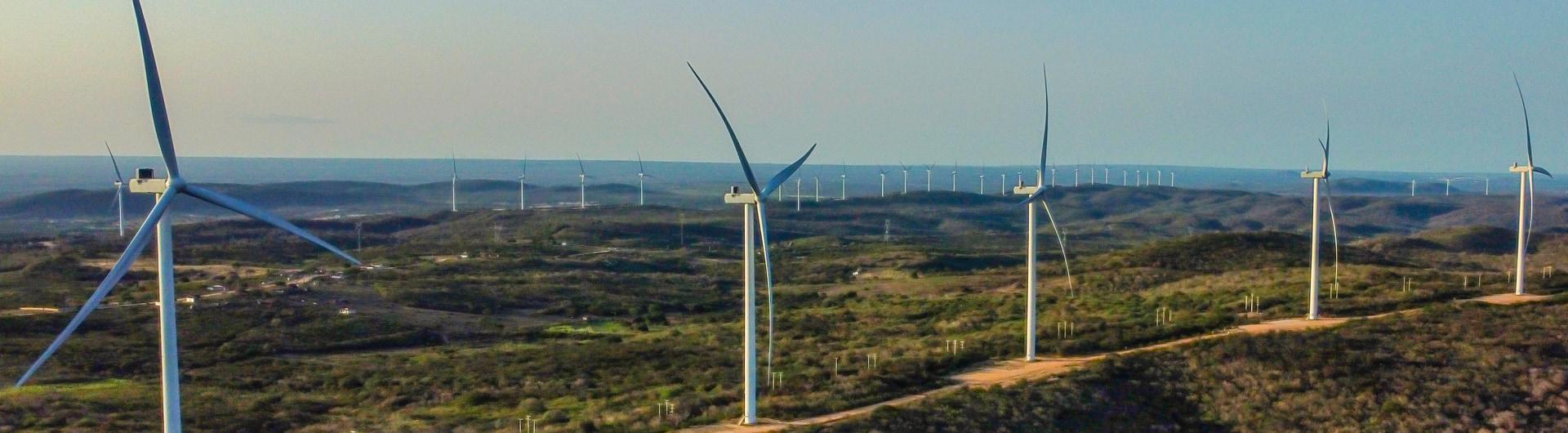
As part of its Integrated Power strategy, TotalEnergies is investing in the growth of the renewable energy sector in Brazil. In 2022, the Company partnered with Casa dos Ventos, Brazil’s leading renewable energy company, to jointly develop a 12 GW renewable energy portfolio. This partnership harnesses Casa dos Ventos’s solid local expertise and major projects, including Rio do Vento, one of the largest onshore wind farms in the world. TotalEnergies brings its expertise in electricity trading and multi-energy solutions (hydrogen, methanol, sustainable fuels, etc.), as well as its global network of industrial customers.
Brazil's challenges in the face of renewable energy growth
This rapid growth in renewable energies is outstripping the grid’s capacity to absorb that power. In Brazil, most renewable energy production is based in the north‑east of the country, while the major proportion of the power is used in the south, which puts tremendous pressure on the grid for connecting these two parts of the country. In addition, distributed generation has increased significantly in the country, which has further compounded the grid instability issues.
Solutions are available for overcoming this problem, such as investing in the grid and developing battery energy storage systems.
Producing oil by prioritizing cost-effective low-emission projects
Continuing to produce oil to guarantee the country’s economic stability
In recent years, oil and gas production in Brazil has grown through the discoveries made in the pre-salt region back in 2000. Brazil currently produces around 4 million barrels of crude oil a day.
The country became a net exporter a few years ago, and oil plays a key role in the country’s economy. Therefore, maintaining and increasing oil production is a top priority for safeguarding economic stability and fulfilling rising energy needs.
The project to develop the Mero field in the pre-salt region has seen production climb from zero barrels eight years ago to 650,000 barrels per day today, through the deployment of five platforms in partnership with Petrobras.
TotalEnergies was also the first international oil company to create a production field (Lapa) in the pre-salt Santos Basin.
Prioritizing low breakeven points and low greenhouse gas emissions projects
How does the development of these oil projects fit in with the Company’s strategy of producing “low-cost and low-emission assets”?
The Brazilian pre-salt reservoirs boast exceptional levels of productivity, i.e. a single well can produce up to 50,000 barrels a day, which lowers costs.
In addition, low-emission deepwater projects leverage all the Company’s technologies for cutting emissions, such as closed flares and electric FPSOs.
At the Lapa field in particular, we have achieved significant progress in reducing methane emissions with measurement campaigns using satellites and drones. We are currently setting up a system for continuously monitoring methane emissions. Hundreds of sensors are capable of detecting the tiniest leaks, so that we can repair them instantly, which helps curb methane emissions. These actions are fully aligned with the Company’s ambition of reining in its methane emissions. In 2024, we lowered our methane emissions by 55%, and we are continuing to reduce them to achieve 80% by 2030.