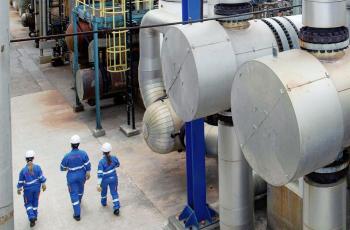


TotalEnergies produce and sell liquified natural gas, which is a necessary transition fuel for building a reliable, low-carbon power system, complementing renewable energies that are intermittent by nature. Moreover, gas helps to reduce emissions from power generation in many countries, since burning gas rather than coal to produce electricity emits half as much CO2 for the same amount of energy produced.
Natural Gas, a Key Energy Source for the Energy Transition
Natural Gas, a Key Energy Source for the Energy Transition
Natural Gas, a Key Energy Source for the Energy Transition
Natural gas to reduce our emissions
The growth of renewable electricity, intermittent and seasonal by nature, will require an increase in flexible power generation resources. The dispatchable generation of gas-fired power plants helps secure electricity supply against weather variability affecting renewables, while also responding to fluctuations in demand.
In addition, natural gas plays an essential role in reducing emissions from power generation as a replacement of coal, which emits half as much greenhouse gas as coal-fired power plants for the same amount of electricity produced(1).


In the gas markets, TotalEnergies focuses on Liquefied Natural Gas (LNG), which can be shipped everywhere in the world and thus contributes to energy security, as it has been the case in Europe since 2022 with the strong reduction of Russian pipeline gas deliveries. With diversified positions, and in particular a leading position as exporter of U.S. LNG - more than 13 Mt exported every year - TotalEnergies is the world's third largest LNG player, with sales of 44 Mt in 2025.
In line with its balanced multi-energy strategy, TotalEnergies intends to consolidate its integrated position across the entire LNG value chain. The LNG volumes managed by the Company (excluding Russian volumes and spot volumes) are thus expected to grow by 50% between 2025 and 2030.

TotalEnergies aims to gradually reduce GHG emissions of the LNG value chain, from gas production to end use. In addition to its efforts to reduce methane emissions, initiatives are being implemented throughout the whole chain. The electrification of liquefaction plant processes is helping to reduce LNG’s carbon footprint today, and tomorrow this reduction will be reinforced by CO2 capture and storage projects. We are also working to reduce shipping emissions by renewing our fleet of chartered LNG carriers with modern, high-performing vessels (average age of the fleet under long-term charter: 6 years versus 11 years for the global fleet of LNG carriers(2)). All LNG carriers chartered by TotalEnergies use LNG as fuel. Furthermore, TotalEnergies actively supports the industry’s efforts to reduce “methane slip” (emission of unburned methane in engines) and joined the MAMII (Methane Abatement in Maritime Innovation Initiative) last February.
Marsa LNG, a low-carbon plant model for LNG production
In April 2024, TotalEnergies launched the Marsa LNG project (TotalEnergies 80% – OQ 20%), a 1 Mtpa LNG liquefaction plant to be built in the port of Sohar in Oman.
Learn more

Our natural gas news
09/10
2025

United States: TotalEnergies reaches Final Investment Decision with its Partners on Rio Grande LNG Train 4, with a 10% Direct Participating Interest and 1.5 MT LNG offtake
09/09
2025

South Korea: TotalEnergies to supply 1 million tons per year of LNG to KOGAS for 10 years
08/06
2025

Argentina: TotalEnergies divests its interest in two Vaca Muerta unconventional blocks
05/19
2025

Canada: TotalEnergies Signs an Agreement to Export 2 Mtpa of LNG for 20 years from the Ksi Lisims LNG Project

04/15
2025

Liquefied Natural Gas: TotalEnergies will supply 400,000 Tons of LNG per year for 15 years in the Dominican Republic
04/15
2025

Liquefied Natural Gas: TotalEnergies to offtake 1.5 Mtpa of LNG from the future Train 4 of Rio Grande LNG Facility
02/17
2025

TotalEnergies and ENI sign an agreement with Cyprus and Egypt for the export of Cyprus Block 6 gas through Egypt
02/12
2025