


Produced by CNBC for TotalEnergies, The Energy Exchange is an editorial series that draws on interviews with selected experts to analyze the major issues shaping the global energy landscape. It reinforces TotalEnergies’ position and reaches as a thought leader shaping the global energy conversation, alongside other respected industry voices.
The Energy Exchange - Why is LNG vital to our energy future?
The Energy Exchange - Why Is LNG Vital to Our Energy Future?
News
03/23/2026
As energy systems face geopolitical uncertainty and the challenge of reducing emissions, LNG is emerging as indispensable for maintaining energy supply. TotalEnergies is a major player in the LNG sector, particularly in the United States, where it is the number one exporter of U.S. LNG.
In this first episode of Energy Exchange, three experts share their insights on LNG:
- Delaram Hormozastarabady (Managing Director, Global LNG North America at TotalEnergies);
- Laurent Ruseckas (Executive Director, First Take Gas, Geopolitics, Finance at S&P Global Energy);
- Kenneth B. Medlock III (Senior Director at the Center for Energy Studies, Baker Institute)
Video Filmed in February 2026
The Role of LNG in the Global Energy Market
LNG (Liquefied Natural Gas) is natural gas that has been cooled to extremely low temperatures until it becomes a liquid. This process reduces its volume by about 600 times, enabling transport over long distances well beyond the reach of pipeline networks. Since the 1960s, this technology has given rise to a vast and interconnected global market.
One of the major advantages of LNG for buyers is its flexibility, which allows them to adjust import volumes in response to market conditions
Today, natural gas accounts for 25% of the global energy mix, and demand for LNG continues to grow. LNG accounts for 13% of the natural gas consumed worldwide, representing approximately 400 million tons traded per year.
Around 24 countries export LNG, led by Australia, Qatar, and now the United States, which has become a major player in the sector.
TotalEnergies' LNG Strategy in the United States
TotalEnergies is the world’s third largest LNG player with a global portfolio of 44 Mt/y in 2025 thanks to its interests in liquefaction plants in all geographies. The Company benefits from an integrated position across the LNG value chain, including production, transportation, access to more than 20 Mt/y of regasification capacity in Europe, trading, and LNG bunkering.
Furthermore, the Company is the number one exporter of U.S LNG, shipping approximately 19 million tons annually.
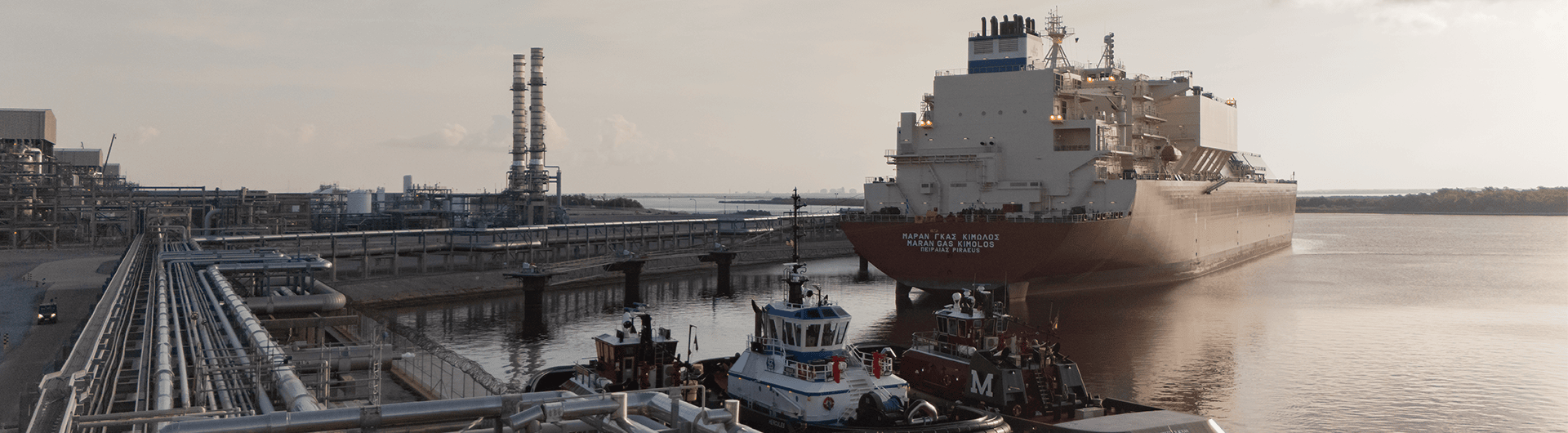
One of its major assets in the United States is Cameron LNG, where the Company is fully engaged and actively involved in its development. In addition to this asset, the Rio Grande LNG project, currently under construction, will further strengthen its export capacity. Phase 1 includes three liquefaction trains under construction in South Texas, with operations expected to start in 2027.
LNG: a partner in the expansion of renewable energy
LNG is playing an increasingly important role in complementing renewable energy sources to meet growing energy demand. Rather than competing with renewables, it facilitates their development by providing the firm, reliable power needed to stabilize the grid. As renewable capacity grows, LNG serves as a key balancing solution for the energy system.
. In regions like ERCOT in Texas, when the wind blows and the sun shines, renewables can account for more than half of the energy mix; however, their availability is not guaranteed around the clock. It is therefore essential to build flexibility and redundancy into the system—a role that natural gas fulfills particularly well.
Additionally, the rapid growth in both the number and capacity of data centers is driving up demand for reliable electricity. In this context, the combination of gas and renewables emerges as a sustainable and relevant energy model for the years ahead.
Delaram Hormozastarabady Managing Director, Global LNG North America at TotalEnergiesYou need LNG to be able to stabilize the grid while we are scaling up on the renewables. It will take some time before we get there and LNG offers reliability and flexibility.

Innovating to decarbonize the LNG Industry
Liquified natural gas plays an essential role in reducing emissions from power generation by displacing coal, resulting in approximately 25% less emissions.*
Nevertheless, today, innovation plays a pivotal role in the evolution of LNG, making it more efficient and sustainable. The decarbonization of the LNG industry today relies on three major pillars:
- Reducing methane emissions, a key factor in limiting the sector’s carbon footprint.
- Lowering emissions from our facilities, exemplified by projects such as Marsa LNG in Oman, which is designed to operate entirely on electricity generated from solar energy.
- Optimizing transportation to adopt more efficient, lower-emission logistics solutions for LNG delivery.
These advances illustrate a trend of continuous innovation that will position gas to remain a strategic fuel in the future, focused on solutions with a lower carbon footprint.
Kenneth B. Medlock III Senior Director, Center for Energy Studies Baker InstituteThere are innovations on the horizon that will actually help natural gas continue to be a fuel of choice. Longer term we can think about transforming natural gas into hydrogen-based fuels. We can also think about direct combustion with carbon capture.

*Source: IEA
02/26
2026

United States: TotalEnergies Signs Agreement to Export 2 Mtpa of LNG for 20 years from the Alaska LNG Project
12/02
2025

TotalEnergies, TES, Osaka Gas, Toho Gas and ITOCHU Partner Up to Develop the Live Oak Project for e-NG Production in Nebraska
09/29
2025
United States: TotalEnergies Pursues its Gas Value Chain Integration by Acquiring Producing Assets in the Anadarko Basin
09/10
2025

United States: TotalEnergies reaches Final Investment Decision with its Partners on Rio Grande LNG Train 4, with a 10% Direct Participating Interest and 1.5 MT LNG offtake
04/15
2025
Liquefied Natural Gas: TotalEnergies to offtake 1.5 Mtpa of LNG from the future Train 4 of Rio Grande LNG Facility
09/27
2024
U.S.A.: TotalEnergies Enhances Gas Value Chain Integration by Acquiring Producing Assets in the Eagle Ford Basin
11/13
2023

United States: TotalEnergies Acquires 1.5 GW Flexible Power Generation Capacity in Texas
10/03
2023

United States: TotalEnergies and Borealis Start Up Baystar JV Polyethylene Unit
07/13
2023
United States: TotalEnergies and its Partners Make the Final Investment Decision of the RGLNG Project in Texas
06/14
2023