


The Roads to Carbon Neutral - Season 4 - Episode 6 - Biogas in Poland: harvesting energy

The Roads to Carbon Neutral - Season 4 - Episode 6
Biogas in Poland: harvesting energy












The Roads to Carbon Neutral
The fourth season of our program entitled "The Roads to Carbon Neutral", in partnership with CNBC Catalyst, provides an insight into the solutions and innovations making the transition to low-carbon energy a reality and helping us achieve a carbon-neutral future(1). These powerful on-the-ground stories are led by TotalEnergies' employees.
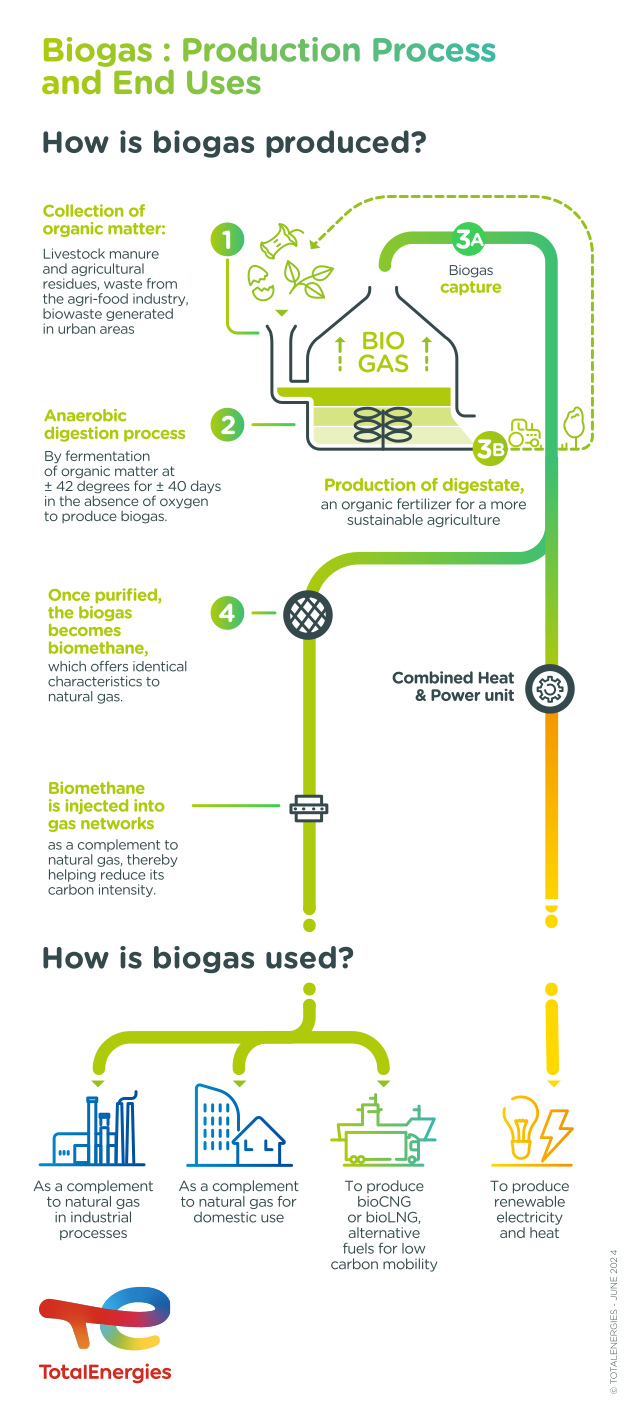
For this sixth episode, we are heading to the Wicie biogas production plant, not far from Warsaw in Poland. Magdalena Myszczyszyn, Biogas Partnerships & Origination Director at Polska Grupa Biogazowa (PGB), shows us how the agri-food industry and energy sector can work hand-in-hand to produce low-carbon energy. By recovering waste, especially from the agricultural sector, the Wicie plant produces heat and electricity. The digestate, a by-product of the anaerobic digestion process, is subsequently used as an organic fertilizer by local farmers for more sustainable agricultural practices. As such, biogas is making a full contribution to the objectives of the energy transition, namely develop renewable energies, reduce greenhouse gas emissions and grow the circular economy.


Biogas is just the beginning. In Poland, we’re targeting biomethane, which is an entirely renewable gas. This will be the next step in reducing our carbon emissions even further.Magdalena Myszczyszyn Partnerships & Biogas Origination Director, Polska Grupa Biogazowa, TotalEnergies


One energy with many uses
The biogas produced by the Wicie plant provides both low-carbon electricity for Polish customers and sustainable heating solutions for local businesses. Several furniture companies are taking advantage of the heat generated by the facilities to dry the wood that they use. These eco-friendly drying solutions protect the wood while maximizing energy production.
In addition, the digestate produced by the Wicie plant during the anaerobic digestion process is subsequently recycled as agricultural fertilizer by local farmers, which cuts down on the use of chemical fertilizers. This virtuous circle benefits the energy transition in the agricultural sector and the country as a whole.
The next step for Polska Grupa Biogazowa is producing biomethane, which is an entirely renewable gas. While the biogas produced by the anaerobic digestion units can be used to generate heat and electricity through co-generation engines, biomethane, after purification process can be injected directly into the gas grid. Removing carbon dioxide, hydrogen sulfide and water from the biogas results in a gas with the same characteristics as natural gas. Ultimately, producing biomethane will help increase the share of renewables in Poland’s energy mix.
All About the Production Process and Uses of Biogas
Biogas, a renewable gas, is produced by the breakdown of organic waste. Injected into gas networks in the form of biomethane, it contributes to the decarbonization of natural gas uses. How is biogas produced? What are its uses?
The Roads to Carbon Neutral

(1) TotalEnergies is committed to a balanced multi-energy strategy. Anchored on two pillars - hydrocarbons, particularly LNG, on the one hand, and electricity, the energy at the heart of the transition, on the other - the company is building a strong position to support its customers' energy transition. To find out more about our strategy: https://totalenergies.com/energy-transition.
(2) Source: IEA 2022 https://www.iea.org/countries/poland/energy-mix.