

TotalEnergies is a global integrated energy company that produces and markets energies: oil and biofuels, natural gas, biogas and low-carbon hydrogen, renewables and electricity. Our more than 100,000 employees are committed to provide as many people as possible with energy that is more reliable, more affordable and more sustainable. Active in about 120 countries, TotalEnergies places sustainability at the heart of its strategy, its projects and its operations.
Energy Transition
Energy Transition
Energy Transition
Global challenges: more energy, less emissions
Access to energy is essential for human development. Today, around 4.6 billion people have a level of access to energy below what is considered necessary to enable satisfactory human development, particularly in terms of access to healthcare and education. Our collective challenge, therefore, is to meet this legitimate demand for energy among the populations of emerging countries, while reducing greenhouse gas emissions.
Since the Paris Agreement in 2015, states have made a joint commitment to strengthen the global response to the threat of climate change, in the context of sustainable development and the fight against poverty, including by containing the rise in global average temperature to well below 2°C above preindustrial levels and continuing action to limit the rise in temperature to 1.5°C above pre-industrial levels.
TotalEnergies supports the objectives of the Paris Agreement and is deploying a strategy to meet the needs of both development and energy transition: more energy and less emissions.
A two-pillar multi-energy strategy
TotalEnergies stays the course of its balanced integrated multi-energy strategy...
TotalEnergies reaffirms the relevance of its balanced integrated multi-energy strategy considering the developments in the oil, gas and electricity markets. Anchored on two pillars, Oil & Gas, notably LNG, and electricity, the energy at the heart of the transition, the Company plans to increase its energy production (hydrocarbons and electricity) by +4% per year between 2024 and 2030.
... responsibly producing low cost, low emissions Oil & Gas...
While drastically lowering the emissions of greenhouse gas from its operations, TotalEnergies plans to grow its Oil & Gas production by around 3% per year over the next five years, predominantly from LNG, thanks to its rich low cost, low emission(1) project portfolio which has been the subject of major investment decisions in 2025 to ensure its medium-term growth.
The Company will put more than ten projects into production by 2030 starting from 2025-2026, in oil in the United States, Brazil, Iraq and Uganda and in gas in Argentina, Nigeria, Malaysia, Qatar and Mexico.
In 2027 and 2028, the start-ups of LNG projects will follow in Qatar, the United States, and Oman. At the same time, the Company strengthens its leading position in Europe in regasification and its leading LNG exporter position in the United States.
... and developing a profitable and differentiated Integrated Power model
The Company is building a world class cost-competitive portfolio combining renewable (solar, onshore wind, offshore wind) and flexible assets (CCGT, storage) to deliver low-carbon electricity available 24/7. TotalEnergies plans to increase its annual electricity production to 100-120 TWh (mainly from renewable sources) by 2030 by allocating a significant investment effort to low-carbon energies, mainly in the Integrated Power segment of $3 to $4 billion per year for the period 2026-2030.
Additionally, TotalEnergies also invests in a targeted manner in low-carbon molecules (biofuels, SAF and biogas, as well as hydrogen and its derivatives: e-fuels) as part of an “equity light” business model with partners.
The key indicator of its progress to measure our transition towards low-carbon energy products is the lifecycle carbon intensity of the energy products used by the Company’s customers. The reduction in carbon intensity reflects the lower carbon content of the energy sold to its customers and the Company’s progress in implementing its transition strategy. This intensity decreased by 18.6% between 2015 and 2025.
TotalEnergies’s ambition in terms of sustainable development and energy transition towards carbon neutrality, together with society
TotalEnergies supports the Paris Agreement, with its call to reduce greenhouse gas emissions in the context of sustainable development and poverty eradication, and its overarching goals to limit planetary warming to well below 2°C by 2100 compared with pre‑industrial levels.
While the Company's transition strategy is based on solid market fundamentals and will be consistently pursued, the Company notes that the context in which its Ambition was adopted has evolved.
Our societies and economies have initiated an energy transition but the global economy is not yet achieving the pace of change required to meet the Paris Agreement objectives. Given the inertia of the global energy system, scientists and experts, including the IEA, believe that the goal of limiting global warming to 1.5°C above pre-industrial levels is now out of reach.
More energy, less emissions, fully engaged in our transition strategy
TotalEnergies is fully engaged in its balanced, valuecreating, transition strategy based on 2 pillars: an oil & gas pillar and an integrated power pillar. This transition strategy supports TotalEnergies' ambition for carbon neutrality, together with society, within the framework set out by the Paris Agreement’s objectives.
We acknowledge that our ability to achieve carbon neutrality is linked to our own efforts and to society’s broader progress in this area.
Therefore:
- TotalEnergies aims to achieve carbon neutrality for its global operated emissions (scope 1+2) by 2050;
- The Company works proactively with its customers to help execute their own energy transition strategies and puts on the market a mix of energies with a lower carbon intensity year after year.
Our ability to do so depends critically on the pace and affordability of technical innovation, on public policies and on consumers' behavior. This is what is encapsulated in “together with society”. As a result of these dependencies, the pathways to our carbon neutrality ambition will need to be reassessed and adapted over time.
2030: our objectives for more energy and less emissions
TotalEnergies plans to increase its energy production (oil, gas and electricity), overall by 4% per year between 2024 and 2030.
In 2025, its electricity production accounted for nearly 10% of its hydrocarbon production. Its objective is to increase it to 20% in 2030.
At the same time, the Company is pursuing its trajectory of reducing its emissions (Scope 1+2 CO2 and methane) from its operated facilities with a perspective to reducing net emissions(2) by 40% by 2030 compared with 2015 and to reducing its operated methane emissions by 80% in 2030 or sooner compared to 2020.
The growth of its electricity sales allows the Company to target a 25% reduction in the lifecycle carbon intensity of its sales by 2030 compared to 2015.

Disciplined and sustainable investments to support our strategy
TotalEnergies' annual capital expenditure target is $14 to $16 billion per year over the 2026-2030 period.
TotalEnergies consistently maintains a significant level of investment in low-carbon energies, mainly in low-carbon electricity, with an investment effort in the Integrated Power segment ranging from $3 and $4 billion per year over 2026–2030.


Natural areas preservation and restoration can be a lever for achieving net zero emissions worldwide by 2050.
Only in 2030 will TotalEnergies begin voluntary offsetting its residual emissions via NBS (Nature Based Solutions) carbon credits and will offset only Company’s Scope 1+2 residual emissions.
That is why we invest in natural carbon sinks—ecosystems that naturally sequester carbon—through forestry projects, regenerative agriculture, and wetland conservation initiatives.
TotalEnergies is working to build a high-quality portfolio and is paying close attention to the integrity and permanence of the emissions reductions and sequestration achieved by the activities financed in this way.
The Company is in favor of strengthening a global framework of trust to further reinforce robust and recognized voluntary crediting mechanisms.

Our multi-energy strategy
Oil: focus on low-cost and low-emission assets
Demand for petroleum products will evolve differently depending on each country’s energy transition roadmap. It is expected to continue growing through 2030–2040 and may then begin to decline thereafter, though at a slower rate than the natural decline rate of existing fields, which the IEA estimates will average 8% per year over the next decade(3).
TotalEnergies therefore believes that new oil projects are still needed to meet this demand and to keep prices at an acceptable level in order to create the conditions for a just transition that gives people time to adapt their energy use. In 2025, TotalEnergies produced 1.4 Mb/d of oil, equivalent to its 2019 level, representing around 1.5% of world production.
TotalEnergies’ first responsibility as an oil producer is to produce differently, by reducing emissions to the minimum. To that end, it approves hydrocarbon projects on the basis of performance criteria, notably technical costs and carbon intensity (Scope 1+2). The Company operates its fields in accordance with strict requirements concerning safety, emissions reduction and environmental impact. The cash flow generated by these Oil and Gas activities contributes to financing its investments in renewable energy.

Liquefied natural gas: a key fuel for the energy transition
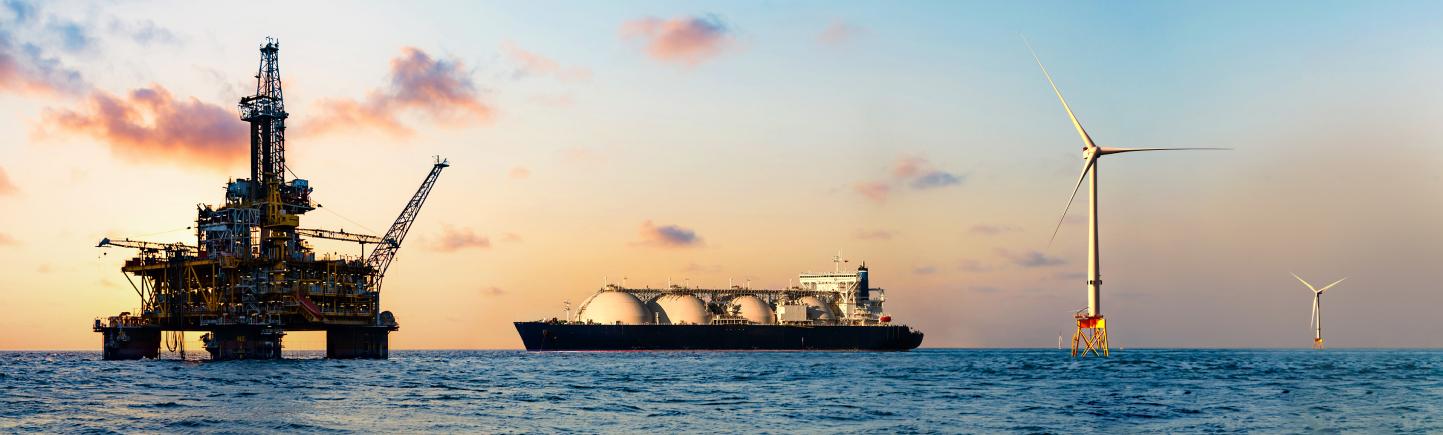
Within the gas markets, TotalEnergies focuses on Liquefied Natural Gas (LNG), which can be shipped everywhere in the world and thus contributes to energy security.
The growth of renewable electricity, intermittent and seasonal by nature, will require an increase in flexible power generation resources. The dispatchable generation of gas-fired power plants helps secure electricity supply against weather variability affecting renewables, while also responding to fluctuations in demand. In addition, natural gas plays an essential role in reducing emissions from power generation as a replacement of coal, emitting half as much GHG for the same amount of electricity produced(4).
In line with its balanced multi-energy strategy, TotalEnergies intends to consolidate its integrated position across the entire LNG value chain. Between 2025 and 2030, LNG volumes (from equity and long-term third-party purchases, excluding Russia after 2027) are expected to grow by 50%.
Reducing the carbon footprint of the LNG portfolio
TotalEnergies aims to gradually reduce GHG emissions of the LNG value chain, from gas production to end use. In addition to its efforts to reduce methane emissions, initiatives are being implemented throughout the whole chain. The electrification of liquefaction plant processes is helping to reduce LNG’s carbon footprint today, and tomorrow this reduction will be reinforced by CO2 capture and storage projects.
TotalEnergies is also working to reduce shipping emissions by renewing its fleet of chartered LNG carriers with modern, high-performing vessels (average age of the fleet under long-term charter: 7 years versus 11 years for the global fleet of LNG carriers(5)).

Electricity: an integrated approach
Electricity demand, which is essential to the success of the energy transition, is expected to grow sharply, as decarbonization is at the heart of the roadmaps of countries committed to carbon neutrality by 2050. In response, Integrated Power, the second pillar of the Company’s strategy, is developing an integrated model encompassing the entire value chain, from power generation to sales and trading activities.
By 2030, TotalEnergies aims to achieve net electricity production of 100-120 TWh, mainly from renewable sources. As part of its transformation into an integrated multi-energy company, TotalEnergies is building a competitive portfolio of renewable (solar, onshore and offshore wind) and flexible (CCGT, storage) assets to provide its customers with an increasing share of carbon-free electricity available 24/7.
Our renewable electricity capacity build-up
TotalEnergies is executing its roadmap in renewables, which is part of the Company's objective to reach 100-120 TWh of net electricity generation by 2030.
At the end of 2025, TotalEnergies has reached a gross installed production capacity of 34 GW of renewable electricity and is actively pursuing the development of these activities to bring this capacity to 80 GW by 2030, a level that should make it one of the world’s top five producers of renewable electricity (wind and solar), Chinese producers set aside.

New low-carbon energy
The energy transition also requires the development of low-carbon energy based on the conversion of biomass and waste, the use of renewable hydrogen, notably for refining or in the longer term the production of synthetic molecules (e-fuels) combining hydrogen with CO2 as a raw material. TotalEnergies is thus developing these new energies: biofuels, biogas, renewable hydrogen and synthetic fuels.
Biofuels
Today, biofuels emit over their life cycle more than 50% less CO2 than their fossil fuel equivalents, making them a partial decarbonization pathway for liquid fuels(6). While demand is emerging quickly, which should lead towards a high-margin market, access to feedstocks (plants, residues, sugar, etc.) remains a barrier to growth. Among these biofuels, TotalEnergies favors the production of Sustainable Aviation Fuel (SAF) to decarbonize the aviation industry. To avoid conflicts of land usage, TotalEnergies is developing solutions based on primarily food industry waste and residues (used oils, animal fats). As of 2024, the Company increases the share of circular feedstocks to more than 75% to produce biofuels.

Biogas
Biogas, produced from the decomposition of organic waste, is a renewable gas. Injected into gas networks in the form of biomethane, it contributes to the partial decarbonization of natural gas uses. TotalEnergies’ gross production capacity continued to increase in 2025, reaching 1.4 TWh/year eq. of biomethane. The Company now intends to pursue its development through growth, mainly in Europe and the United States.
Hydrogen
To reduce the carbon footprint associated with the production, transformation and supply of energy to its customers, one of the levers identified by the Company is the use of low-carbon hydrogen to decarbonize its European refineries, which would reduce their direct CO2 emissions by up to three million tons a year by 2030.
TotalEnergies is rolling out four types of projects:
- renewable hydrogen production in TotalEnergies biorefineries;
- green hydrogen production by TotalEnergies and its partners;
- tolling agreements;
- long-term green hydrogen supply contracts.
(1) Scope 1 and Scope 2 greenhouse gas (GHG) emissions. Please refer to the definitions in the Sustainability & Climate 2026 Progress Report. ↑
(2) The calculation of net emissions includes nature-based carbon sinks projects as from 2030. ↑
(3) Source: The Implications of Oil and Gas Field Decline Rates (IEA, September 2025). ↑
(4) Source: IEA Emission Factors Package - 2025. ↑
(5) Source: S&P. ↑
(6) According to the European Directive 2018/2001 named RED II. ↑